Making kitchen experience easier to pass on
A heritage recipe carries more than ingredients. The next generation also needs to understand the decisions behind it.
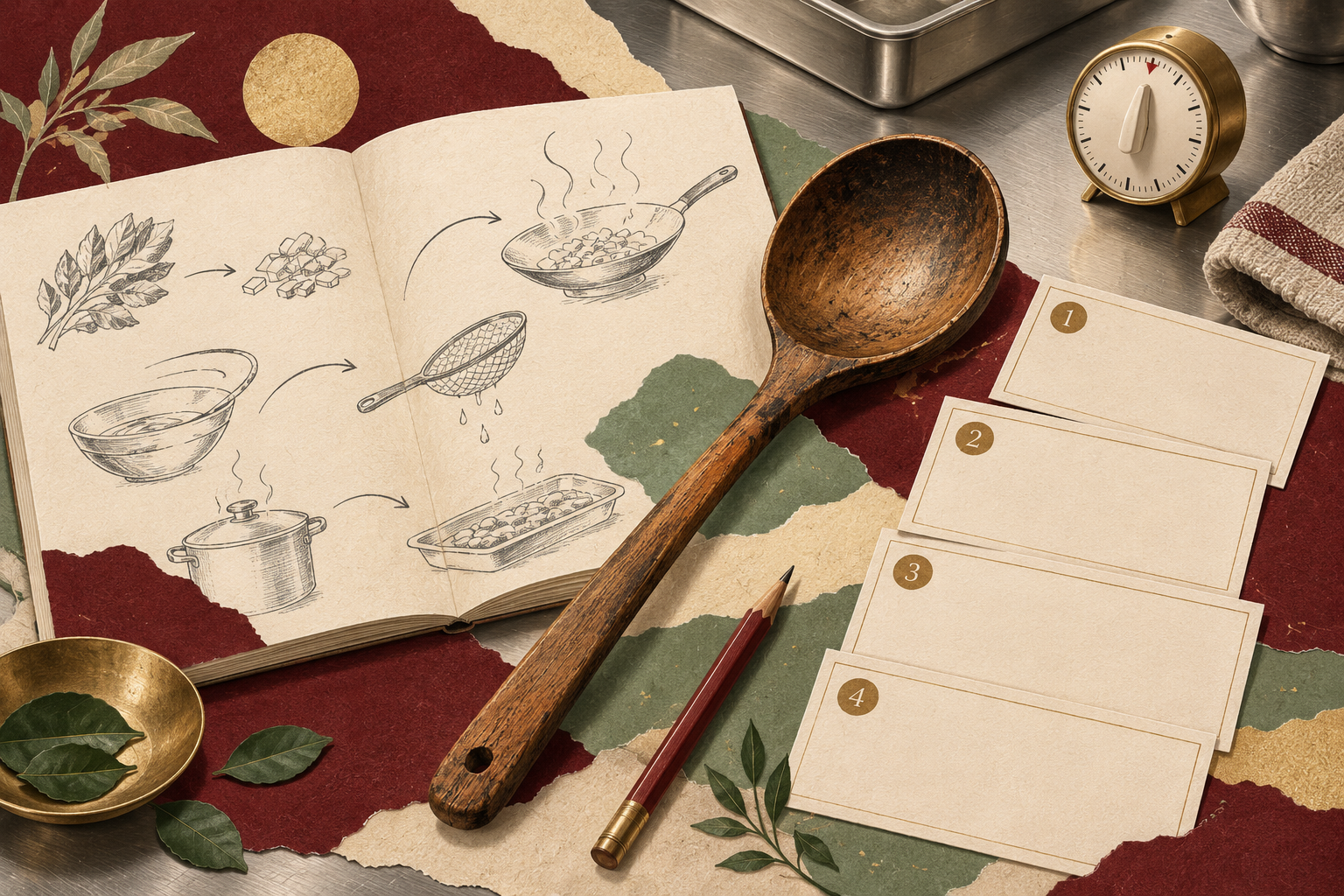
An experienced cook may recognise the right moment without looking at a clock. A newer colleague needs something more explicit: what to observe, which decision to make and when to ask for help. That gap is worth addressing before knowledge becomes dependent on one person.
In a 24 October 2026 CNA Lifestyle interview, Tan Ser Seng’s third-generation operators described learning from their father. Vivian Tan recalled documenting dishes by watching him cook when written recipes were absent. The report provides a specific example of the work involved in passing on kitchen knowledge; it does not establish how every heritage business operates.
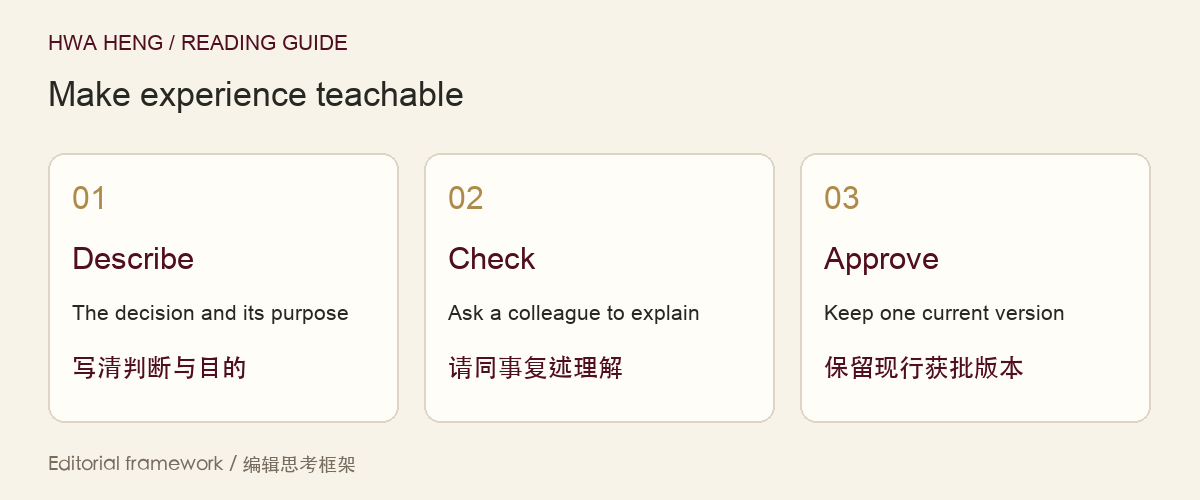
Describe the decision, not only the action
Our editorial suggestion is to begin with one task that frequently leads to questions. A useful instruction should explain its purpose, the expected result and the point at which a supervisor needs to be consulted. Simply listing actions may leave the most important judgement unstated.
For example, a preparation handover could identify what has been completed, what remains outstanding and who is responsible for the next check. This is an organisational example, not a substitute for an approved recipe or food-safety procedure.
Test whether another person understands
Ask a colleague to explain the instruction back in their own words before using it under supervision. If their interpretation differs, revise the wording or illustration. The test is whether the next person can understand the intended decision, rather than whether the document looks comprehensive.
For a bilingual team, review the English and Chinese versions together. Terms for equipment, tasks and responsibility should mean the same thing in both. A natural adaptation can be clearer than a literal translation, but it must preserve every essential condition.
Give the document an owner
Include a version date, a named role responsible for approval and a clear place for the current copy. Retire outdated working copies when an approved revision is introduced. Otherwise, a well-written instruction can still create confusion if different shifts follow different versions.
Not every detail belongs online. A public overview can explain the support structure, while recipes and operational instructions remain available only to authorised staff. For heritage operators such as Hwa Heng, this separates public explanation from confidential working detail.
Passing on experience takes observation, conversation and repeated checking. Documentation supports that human work; it does not replace it.
让厨房经验,成为接得住的传承
一道传统菜肴承载的不只是食材与配方。接棒的人,也需要理解每一个判断背后的理由。
经验丰富的厨师,可能不看时钟就知道下一步何时进行。新同事却需要更明确的说明:观察什么、怎样判断,以及什么时候应该请示。趁知识还可以交流时,把这些判断讲清楚,比等到工作只能依赖某一个人才来补救,更有意义。
在CNA Lifestyle于2026年10月24日刊登的访问中,Tan Ser Seng的第三代经营者谈到了向父亲学习的过程。Vivian Tan回忆,当时没有书面食谱,她通过观察父亲烹调来整理步骤。这是一个传递厨房经验的具体案例,并不能代表所有传统餐饮企业的运作情况。
不只写动作,也要说明判断
我们的编辑建议是:先选一个经常引起疑问的工作环节。一份实用说明,应交代目的、预期结果,以及什么情况下需要向主管请示。如果只有动作清单,最关键的判断仍可能没有被说清楚。
例如,备料交接可以说明哪些事情已经完成、哪些还未完成,以及下一次检查由谁负责。这只是工作安排的例子,不能代替经批准的食谱或食品安全程序。
确认接棒的人真正理解
在主管指导下实际操作之前,可以先请同事用自己的话复述说明。如果理解与原意不同,就修改文字或图示。重点在于下一位同事能否理解应作出的判断,而不是文件看起来是否足够完整。
对于使用两种语言的团队,应把英文与中文版本放在一起核对。器具、工作内容和责任的称呼,两种语言都要表达同一个意思。自然的中文表达可能比逐字翻译更清楚,但不能遗漏任何必要条件。
每份文件,都要有人负责
注明版本日期、负责审批的岗位,以及在哪里查看现行版本。获批的新版本推出后,应撤下旧的工作副本。否则,即使说明本身写得很好,不同班次各用一版,仍然可能造成混乱。
也不是所有内容都适合公开。网站可以介绍支持架构,食谱和具体操作说明则只供获授权的员工查阅。对华兴这样的传统餐饮经营者来说,这样能够把公开介绍与内部保密的操作细节清楚分开。
传承经验,需要观察、交流和反复核对。文件帮助团队做好这些工作,但无法取代人与人之间的指导。
- CNA Lifestyle — Tan Ser Seng’s third-generation owners · 24 October 2026 · read 30 October 2026
Industry Insights: the interview is attributed reporting; the documentation suggestions are our editorial analysis. No commercial relationship or measured operating results are implied. / 访问内容已注明来源;文件整理建议属于编辑观点,不代表双方存在商业关系或已取得可量化的营运成效。