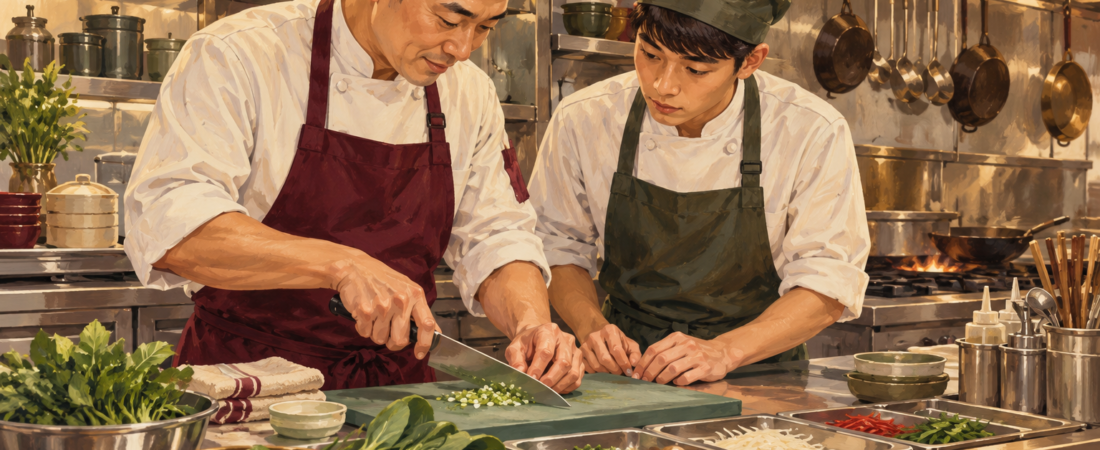
A stronger kitchen team starts before the first shift
Fresh discussion of Singapore’s F&B manpower pressures puts hiring in focus. Clear roles, patient training and workable routines matter just as much as finding the next employee.
Chinese edition & reading guides added 12 October 2026 · 中文版及阅读指南更新于2026年10月12日
Finding another pair of hands is only the beginning of building a reliable food-service team. A Business Times report published on 7 October 2026 covered Parliament’s discussion of manpower pressures facing Singapore’s F&B businesses, including the need to rethink how work is organised.
The report also highlighted expanded hiring options for selected food-service roles. MOM’s current NTS Occupation List includes cooks, food and drink stall assistants, kitchen assistants and waiters, subject to employer and Work Permit requirements. Operators should check the official conditions before making hiring commitments.
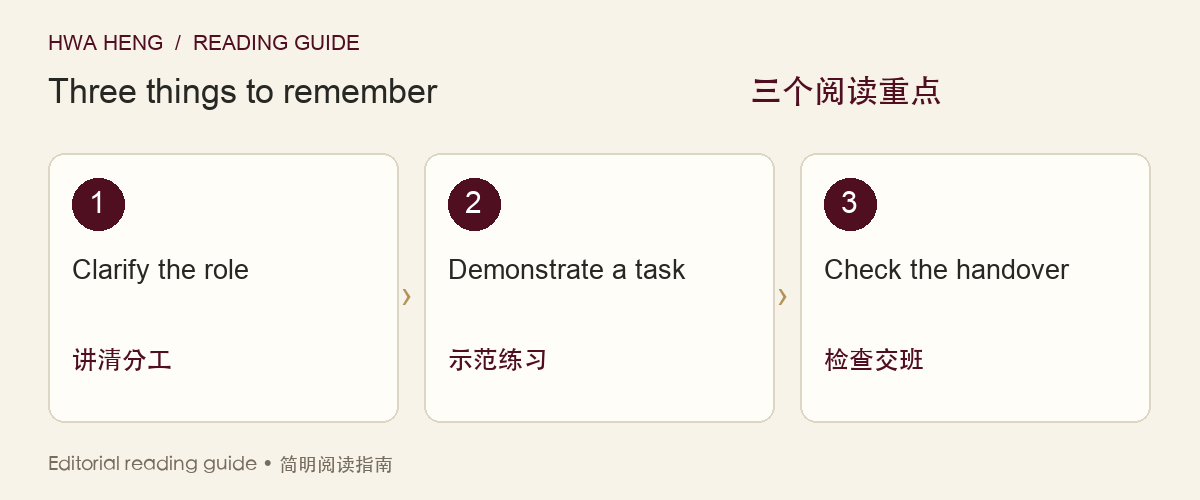
Make the role clear
Our perspective is that a new employee needs more than a job title. Explain the tasks, who will supervise them and what a good shift looks like. A preparation role and a customer-facing role have different demands; treating them as interchangeable can leave both the worker and the team uncertain.
For a small outlet, write down a short sequence of responsibilities. Keep it realistic for the actual workstation and shift. This helps a supervisor spot where coaching is needed instead of assuming that every difficulty is a lack of effort.
Teach in steps, then observe
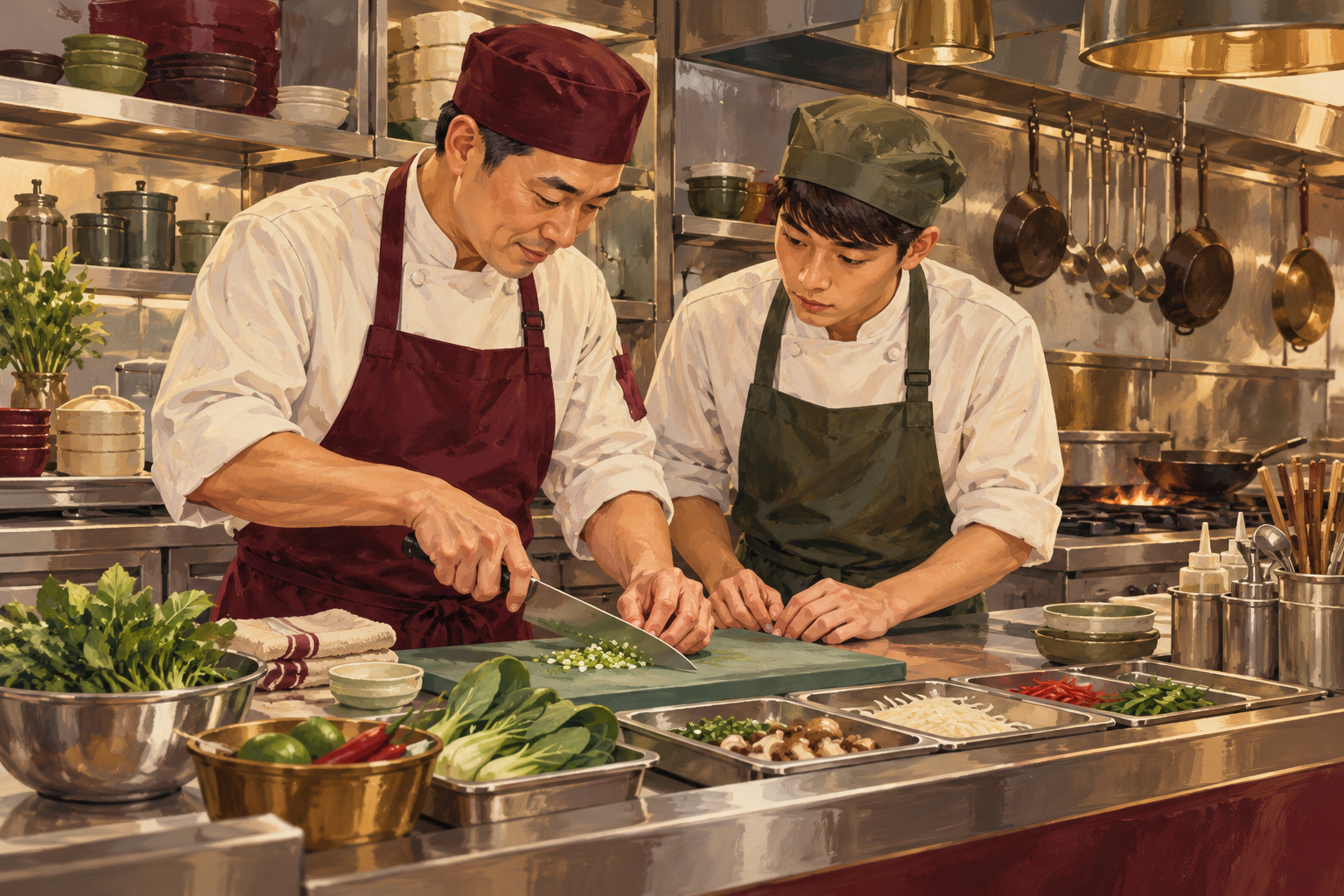
A busy service is a difficult moment to learn an unfamiliar routine. Where practical, introduce essential tasks before the rush, demonstrate one at a time and ask the learner to show the process back. Short instructions and visual examples can help when colleagues have different first languages.
Agree who checks the work and when. The aim is consistent preparation and safe working habits, not simply finishing an induction checklist. Required training and workplace obligations still need to be handled through the relevant official processes.
Build a shift that people can sustain
Consider the everyday points of friction: tools stored too far away, unclear handovers or several people waiting for the same station. Removing unnecessary movement and confusion can make a shift easier without placing more pressure on an already stretched team.
Listen to staff after a busy period. Ask which task caused a delay and what would make tomorrow’s service smoother. A small adjustment is easier to assess when the team knows what changed and why.
For heritage food businesses, dependable people help carry familiar flavours and service into the next generation. Broader hiring options can support that work, but they do not replace supervision, training or thoughtful shift planning. For prospective operators in Singapore, understanding the work behind each meal is part of understanding the business.
Industry Insights: practical suggestions above are Hwa Heng’s editorial analysis, not an announcement of hiring or staffing changes. Check current MOM requirements for your circumstances; this is not work-pass advice.
稳定的厨房团队,从第一班之前开始
招聘更多人只是起点。清楚分工、逐步示范和顺畅交班,才能帮助新员工真正投入工作。
餐饮业面对人手压力,经营者自然会关心招聘渠道。但一个新同事加入后,是否知道先做什么、遇到问题问谁,同样影响厨房运作。
《商业时报》2026年10月7日的报道讨论了国会中的餐饮人力议题。人力部资料也列出非传统来源地区劳工可从事的指定职业,包括厨师、餐饮摊位助手、厨房助手及服务员等;各职位仍须符合相关条件。招聘前应查看人力部最新规定,不能把职业名单理解为无条件聘用。
先把工作讲清楚
厨房准备、面食制作和前台服务的工作不同。简单列明岗位任务、负责人和交班方式,可以帮助员工理解自己的责任,也让主管知道需要检查什么。
比起一句‘忙的时候帮一下’,明确的工作顺序更容易执行:先完成哪项准备、怎样交给下一位同事、缺货或出错时通知谁。本文提出的是营运思考,并非描述华兴现有的人事安排。
在忙碌前,先练好一件事
新员工刚到岗,不宜只靠午餐高峰时的口头提醒。主管可以先示范一项工作,再请员工实际做一次,确认理解后才继续下一步。
清楚的图示、员工熟悉的语言和及时反馈,能帮助学习。简单检查表可以辅助交班,但不能代替必要的培训、正式要求或主管的判断。
小调整,也能让合作更顺畅
工具放在哪里、准备工作怎样衔接、下一班需要知道什么,都值得听取员工意见。每次改善一项具体问题,比笼统要求大家‘做快一点’更有帮助。
传统餐饮品牌要维持熟悉的味道,也需要可靠的团队。扩大招聘选择,并不能取代指导、沟通和合理的工作流程。本文没有宣布华兴的新招聘政策、员工表现或营运成果。
- The Business Times: F&B sector and manpower pressures · Jermaine Fok · 7 October 2026
- Ministry of Manpower: NTS Occupation List · checked 10 October 2026