Less admin, more hospitality: a practical lens on F&B digitalisation
A reflection on July’s Restaurant Asia address: start with a clear operational problem before choosing a digital tool.
Chinese edition & reading guides added 12 October 2026 · 中文版及阅读指南更新于2026年10月12日
Digital tools are most useful when they help people do a clearly defined job. For food businesses, that could mean reducing repeated administration, making information easier to check or allowing more attention to preparation and customer service.
In her Restaurant Asia address on 15 July 2026, Low Yen Ling discussed AI and digital integration in food service. The address identified areas such as demand forecasting, inventory and task automation, while emphasising the importance of people, data and process design.
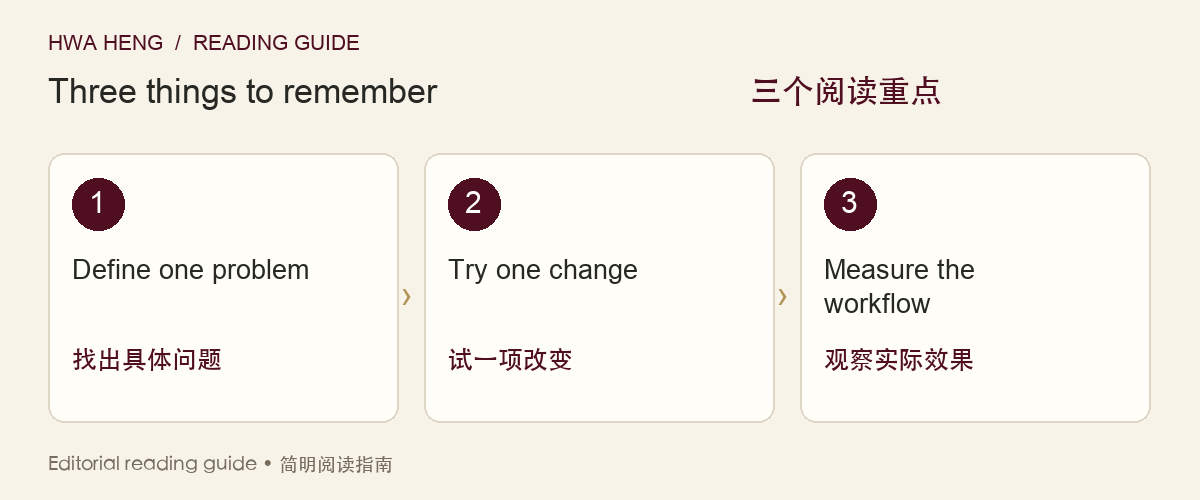
Start with the problem
Our interpretation is that an operator should describe the task before choosing the technology. What information is repeatedly entered? Where does a team wait for confirmation? Which routine question interrupts service? A specific problem provides a better starting point than a general desire to use AI.
For example, a business reviewing stock records could map how an order moves from the outlet to the purchasing team. That exercise may reveal an unclear handover or inconsistent item names before any new software is considered. This is an illustrative approach, not a description of Hwa Heng’s systems.
Keep people in the process
A tool that produces a report is only useful if someone knows how to interpret it and act on it. Staff need a practical way to correct errors, ask questions and understand which information is dependable. Responsibility should remain clear when a process changes.
The July address connected successful adoption with upskilling and redesigned workflows. That broader emphasis is useful for heritage food businesses: technology can support operations while the food identity and service experience remain central to the brand.
Measure a small change first
A sensible trial could compare the time spent on one administrative task before and after a change, alongside error rates and staff feedback. Improvement should be observed in the actual workflow rather than inferred from a vendor demonstration or a promise of efficiency.
For readers exploring Hwa Heng, the kitchen and brand story provides the food context for this discussion. This article is industry commentary. It does not announce Hwa Heng’s adoption of a particular AI system or claim savings, funding approval or commercial results.
少一点重复工作,多一点待客时间
选择数码工具之前,先把实际问题讲清楚。工具的价值,应在团队每天的工作中看得到。
数码工具可以协助餐饮团队减少重复记录、查找信息和等待确认,把更多注意力放在准备食物与服务顾客上。但前提是:它确实帮助完成一项明确的工作。
刘燕玲在2026年7月15日Restaurant Asia演讲中,谈到餐饮业的人工智能与数码整合,包括需求预测、库存及任务自动化,也强调人员、数据和流程设计的重要性。
先找问题,再找工具
哪些资料需要一再输入?哪一步经常等人确认?哪一种例行问题总在服务时段打断团队?具体描述这些情况,比笼统地说‘我们要用AI’更容易找到方向。
例如,检视库存记录时,可以先画出门店下单到采购接收的流程。也许先发现的是交班不清楚,或同一食材用了不同名称,而不一定需要立刻购买软件。这只是说明方法的例子,不是华兴系统的描述。
人仍然需要理解和负责
工具能够产生报告,不代表报告会自动带来改善。员工仍需知道怎样阅读、发现错误后怎样修正,以及哪些资料可以用来作决定。流程改变后,责任也要明确。
演讲提到提升技能与重新设计工作流程。对传统餐饮品牌而言,数码化可以辅助营运,但食物特色和待客体验仍是品牌的核心。
先试一项,再看结果
可以选择一项行政工作,比较改变前后所花的时间,同时记录错误和员工反馈。实际工作有改善,比供应商示范中的承诺更有说服力。
本文属于行业观点,并非宣布华兴采用某个AI系统,也没有声称已经节省成本、获得资助或取得商业成果。想进一步了解品牌的食物背景,可以继续阅读厨房与美食故事。