
Short restaurant leases: make the trial count
A recent Singapore report highlights temporary spaces as a way to test dining concepts. The useful question is what an operator should learn before the lease ends.

Chinese edition & reading guides added 12 October 2026 · 中文版及阅读指南更新于2026年10月12日
A short lease can give a food business room to experiment, but it also puts a date on the experiment. A CNA report published on 28 September 2026 explored how Singapore founders have used incubators and temporary premises to test concepts before committing to more permanent restaurants.
The report described different arrangements, including shorter tenures and subsidised rents. It also highlighted the uncertainty facing tenants at Punggol East container park as the site approaches closure. These examples show both the opportunity to begin and the need to plan for what comes next.
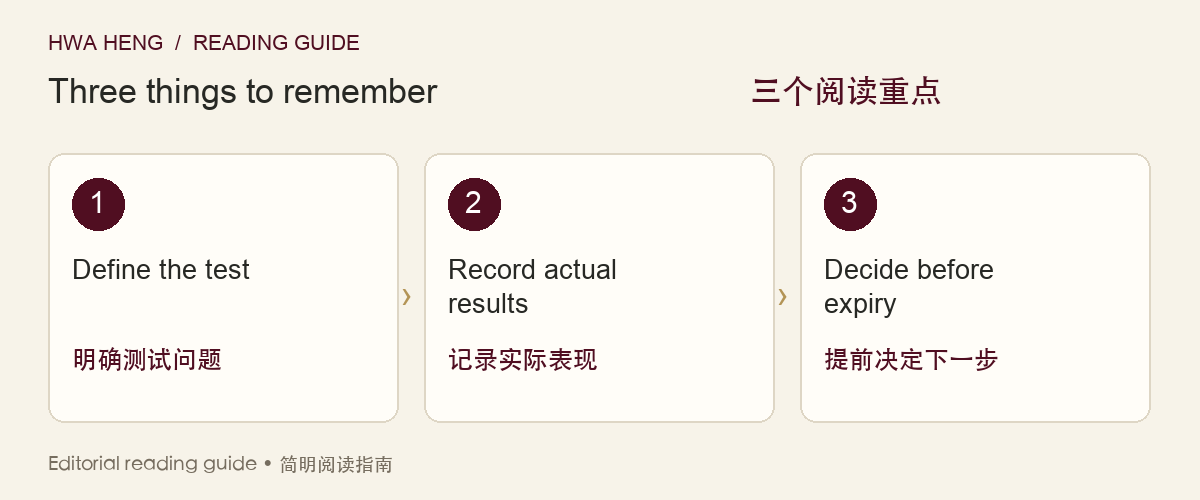
Decide what the trial must answer
Our perspective is that a temporary opening should have a clear learning purpose. Does the menu attract repeat visits? Can the team deliver consistent food during a busy service? Do customers return without a launch promotion? A crowded opening weekend may be encouraging, but it cannot answer every question.
Keep the test manageable. A focused menu makes it easier to observe preparation time, ingredient waste and customer preferences. Record feedback alongside everyday operating figures, so enthusiasm can be compared with the practical work required to serve each meal.
Plan the ending before the beginning
The lease period affects decisions about equipment, fit-out and marketing. Before spending, identify which items can move to another location, which improvements belong to the premises and what it will take to close or relocate. Review the actual agreement with suitable professional help rather than assume that renewal will be available.
A trial also needs decision dates. Leave time to choose between continuing, changing the concept or stopping. Waiting until the final weeks can turn an orderly experiment into a rushed search for the next space.
Build something customers can recognise
For heritage food businesses, the address is only part of the experience. A recognisable flavour, reliable service and clear outlet information help people understand what they can expect. If a business moves, communicating the new location is part of preserving that relationship.
For prospective operators and partners exploring Singapore, temporary premises may offer a useful learning environment. Their value depends on the terms, the operating discipline and the lessons captured—not simply on a shorter commitment. The strongest outcome is a clearer decision about the next step, even when that decision is to revise the idea.
Industry Insights: the practical suggestions above are Hwa Heng’s editorial analysis. This article does not announce a Hwa Heng incubator programme, recommend a particular lease or promise business returns.
短期餐饮租约:把试营运的时间用好
短期场地可以帮助测试餐饮概念。重要的是在租约结束之前,知道自己学到了什么,以及下一步怎样走。
有些餐饮创业者会先在临时场地测试概念,而不是一开始就作长期承诺。CNA在2026年9月28日的报道讨论孵化空间、较短租期及补贴租金,也提到Punggol East集装箱园区关闭带来的不确定性。
短期租约可以提供试验机会,但不能只把它看成低成本开店。我们的看法是:时间有限,更应事先决定要观察什么。
从第一周末,看到日常需求
开业时的热闹,或促销带来的人流,未必代表长期需求。试营运期间应留意顾客是否再次购买、不同日子有什么差别,以及不靠促销时的表现。
菜单不必一开始就很复杂。较集中的选择,可能更方便观察准备时间、损耗和顾客反馈。把实际营运数字放在一起看,才更容易判断哪些环节需要调整。
租约之外,还有哪些成本
设备能否搬到下一处?装修有哪些部分不能带走?结束营业时还需要承担什么费用?这些问题,应在签约和投入资金之前了解清楚。
不要假设租约一定能够续期。有关租约、装修责任和退出安排,应核对具体协议,必要时寻求专业协助。本文不是法律意见,也不能代替项目本身的评估。
提前设下决定日期
可以在租期结束前安排一次检视:哪些做法值得继续,哪些需要修改,是否应转到另一种经营方式,或者结束试验。留出时间,才能作较从容的决定。
传统品牌还需要让顾客清楚知道门店和搬迁安排,保持食物与服务的一致性。试营运的价值在于获得可用的经验,并不等于已经证明未来回报。本文没有宣布华兴的新场地或租约。
- CNA: Why F&B founders risk sweat and savings on short-lease spaces · Natasha Ganesan · 28 September 2026