A welcoming meal starts with a cared-for space
NEA’s September cleanliness update offers a useful reminder for food businesses: the surroundings are part of the dining experience, and shared spaces need clear responsibilities.
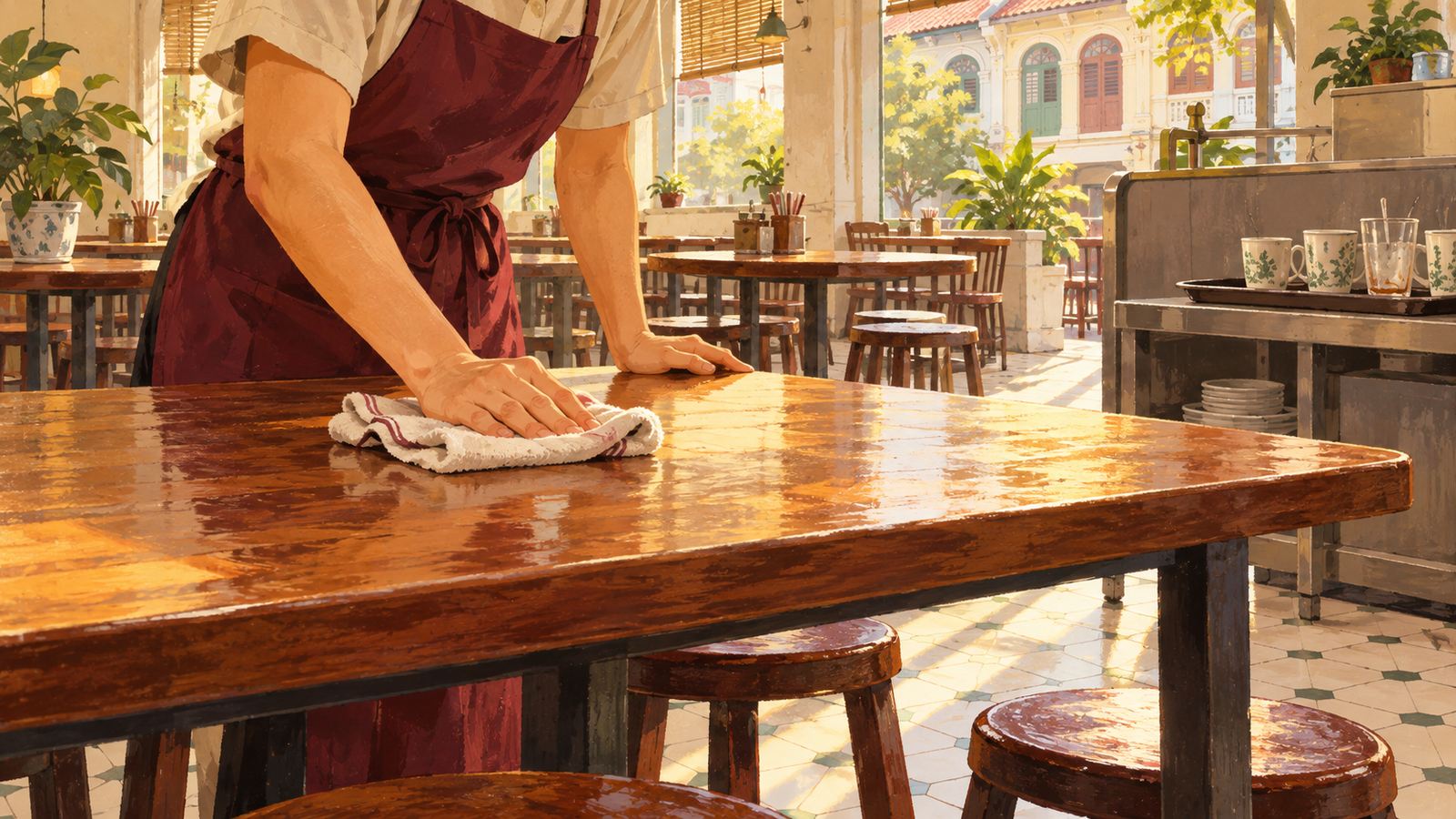
A familiar dish can bring someone through the door. The table, seating and surrounding space help determine how comfortable they feel once they arrive. For a heritage food business, those everyday details belong alongside flavour and service.
In its 4 September 2026 update, the National Environment Agency described continued efforts to improve shared spaces, including public toilets and refuse management. It also reported that the average tray and crockery return rate at hawker centres remained at 94 per cent. These are national observations, not a cleanliness assessment of any Hwa Heng outlet.
Make the next customer’s arrival easier
Our editorial perspective is that care should be visible in ordinary moments. A cleared table, a seat ready to use and an easy-to-find tray return point make a shared dining area more straightforward to navigate.
Diners can contribute by returning used trays and crockery to the appropriate point. Operators and cleaning teams still need their own arrangements for maintaining the space. One person’s contribution does not remove everyone else’s responsibilities.
Know who follows up
In a coffeeshop, food court or shopping centre, several teams may share the environment. An outlet should clarify with the premises manager which areas each team looks after and how a problem is reported.
A useful handover might identify a table needing attention or a concern that belongs with the building’s cleaning team. The aim is a clear route from noticing an issue to having someone follow it up, rather than assuming another person has already handled it.
Look beyond the first impression
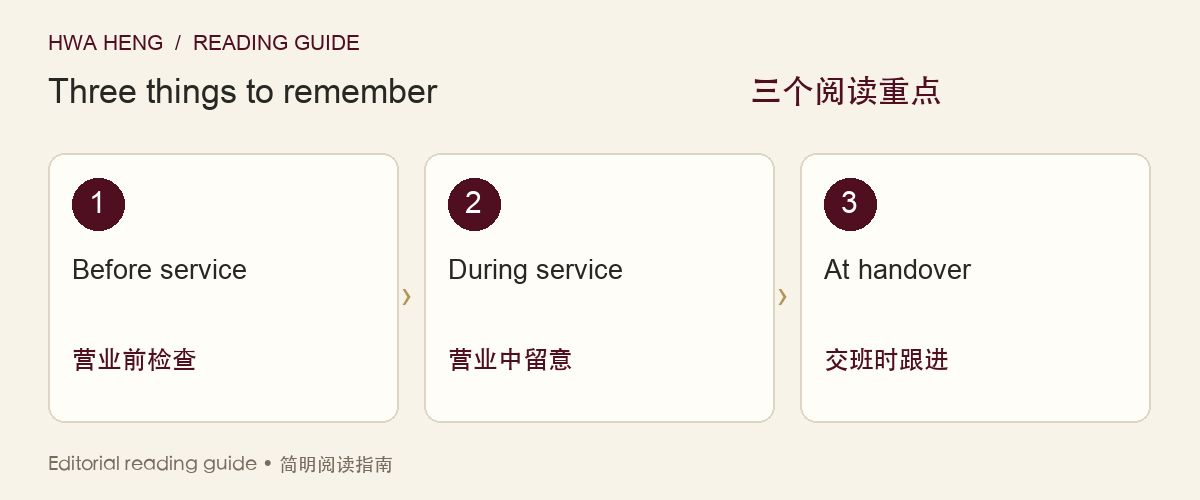
A tidy opening does not tell the whole story. Teams can review the customer journey at different points in the day: before service, during a busy period and at handover. These are suggested observation points, not a substitute for required cleaning procedures.
For older customers, families and visitors, a thoughtfully maintained setting supports an easier visit. The lesson is to give the surroundings the same continuing attention as the food. This article offers industry commentary; it does not announce Hwa Heng inspection results, certifications or a new cleaning programme.
一餐吃得舒心,也需要用心照顾的环境
国家环境局9月的清洁报告提醒餐饮经营者:顾客的体验不只在碗里。共用环境需要大家配合,也需要清楚分工。
熟悉的味道,可以让顾客走进来。到店之后,桌子、座位和周围环境,也影响这一餐吃得是否舒服。对传统餐饮品牌来说,这些日常细节,应与食物和服务一起用心照顾。
国家环境局(NEA)2026年9月4日的报告,介绍了改善共用环境的持续工作,包括公共厕所清洁和垃圾管理。报告也指出,小贩中心的平均餐盘与餐具归还率维持在94%。这些是全国情况的观察,并不是对任何华兴门店的清洁评估。
让下一位顾客,更容易安心入座
我们的看法是:用心可以表现在普通的小事里。桌面收拾好、座位可以使用、餐盘归还处容易找到,都能让共用用餐环境更方便。
顾客用餐后,可以把用过的餐盘与餐具送到适当的归还处。与此同时,经营者和清洁团队仍需有自己的维护安排。一方愿意配合,并不代表其他人的责任就可以省略。
发现问题之后,知道找谁跟进
咖啡店、食阁和商场,可能有不同团队共同使用同一环境。门店应与场所负责人讲清楚,各自照顾哪些范围,发现问题后怎样通知。
交班时,可以说明哪张桌子还需要处理,或哪些情况应交给大楼清洁团队。重点是让问题从‘有人看到’走到‘有人跟进’,而不是大家都以为另一个人已经做了。
开店时整齐,还需要持续留意
只在开店前看起来整齐,并不能说明整天的情况。团队可以在营业前、忙碌时段和交班时,分别看看顾客经过的环境。这是观察与沟通的建议,不能取代实际需要遵守的清洁程序。
对长者、家庭和访客而言,得到持续照顾的环境,可以让到访更轻松。食物值得用心,周围环境也一样。本文属于行业观点,并非宣布华兴的检查成绩、认证或新的清洁计划。
- NEA: Cleanliness is a shared responsibility · 4 September 2026 · read 12 October 2026
Industry Insights: practical suggestions are Hwa Heng’s editorial analysis. The September report supplies background, not breaking news or an assessment of Hwa Heng. / 实用建议属于华兴的编辑观点;9月报告提供背景,并非华兴评估或突发新闻。