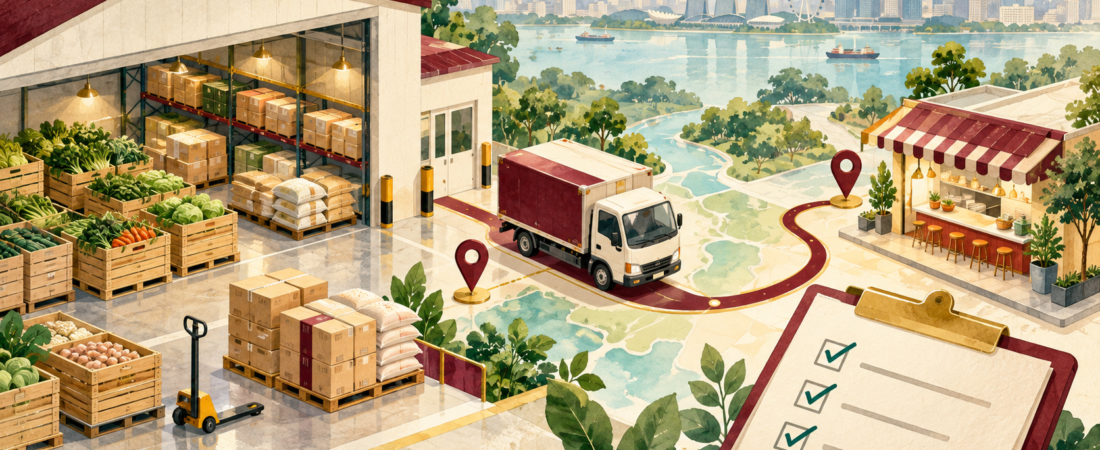
A reliable meal starts with a supply plan
SFA’s September preparedness exercise offers a practical reminder: food businesses should think through a delayed delivery before it happens.
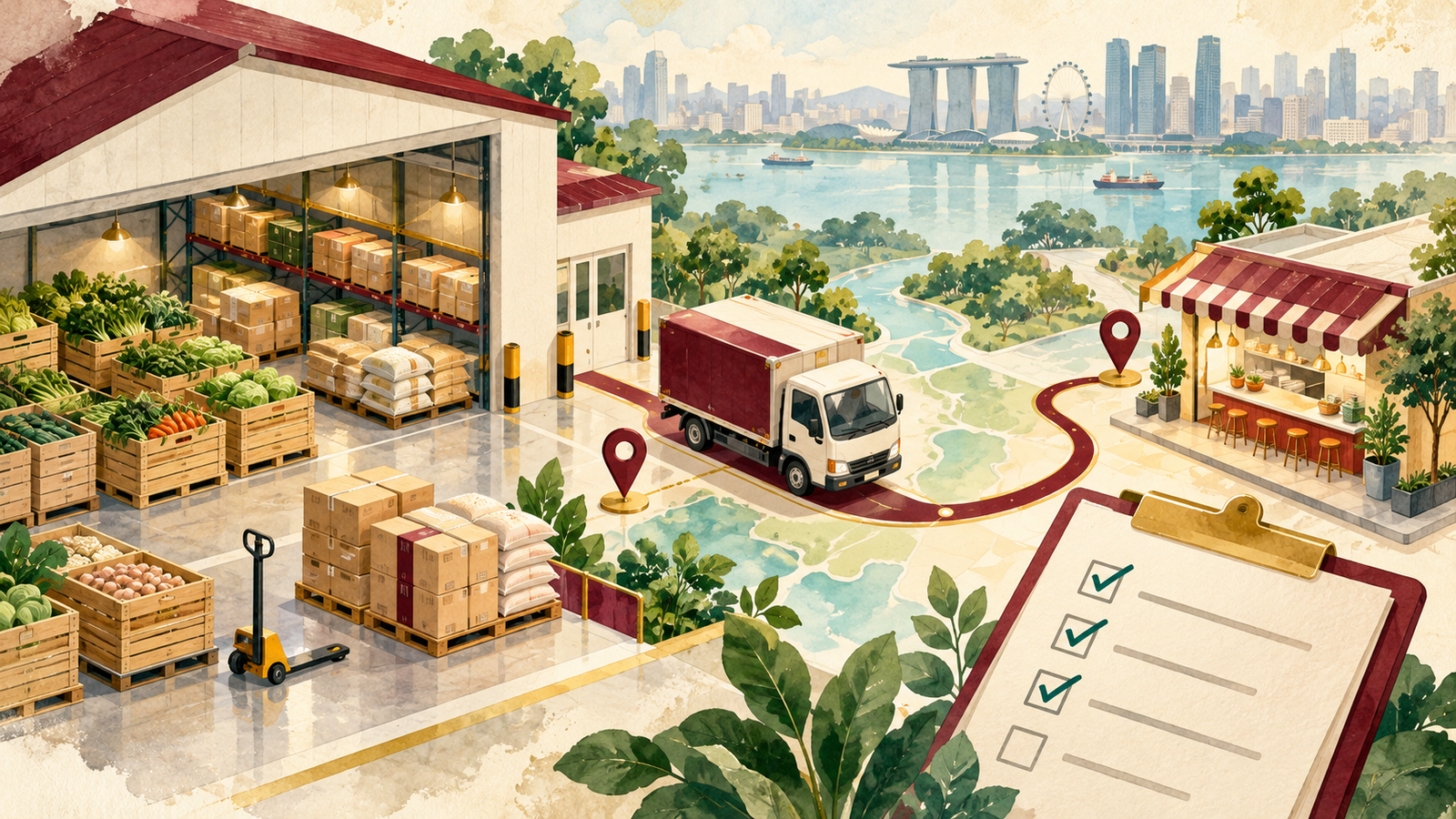
Customers see the meal arriving at their table. Behind it is a chain of deliveries, storage decisions and preparation. When one link changes, a kitchen needs a workable next step rather than a hurried guess.
The Singapore Food Agency’s 23 September 2026 exercise tested readiness for a severe food supply disruption. SFA and industry participants checked procedures and logistics for moving stockpiled food from warehouses to retail outlets. This was a preparedness exercise, not an announcement that Singapore was experiencing a shortage.
Know what a delay would affect
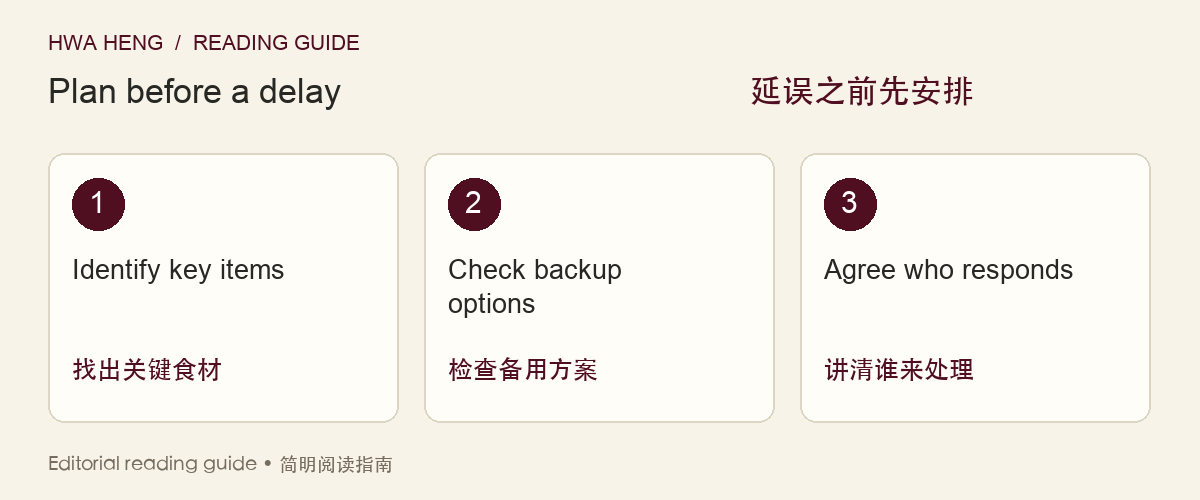
Our editorial view is that a food business can start small. Identify ingredients that several dishes depend on, and ask what would happen if a delivery arrived late. Which menu items would be affected first? Who would contact the supplier, and who would update the service team?
A short written plan can make those decisions easier to follow. It should reflect the actual kitchen, storage capacity and supplier arrangements, rather than assume every outlet can respond in the same way.
A backup must still fit the dish
Finding another source is only part of the question. A different ingredient may change flavour, preparation or what the customer receives. A backup should meet the business’s specifications and applicable food requirements; availability alone is not enough.
Any proposed change needs checking before service. When a familiar dish cannot be offered as described, staff should explain that clearly and let the customer choose another option. Quietly changing an important ingredient can undermine the confidence a heritage brand works to build.
Practise the conversation, too
A useful rehearsal could be a simple team discussion: a delivery is delayed, a key item runs low, and lunchtime is approaching. Work through who checks the position, who makes the menu decision and what diners will be told.
This is a suggested planning exercise, not an instruction to stockpile more food. Buying extra without considering suitable storage, shelf life and demand can create a different problem.
For a food brand such as Hwa Heng, the broader lesson is that dependable service includes what happens behind the counter. Clear responsibilities and honest communication help a team respond thoughtfully when normal arrangements change. This article does not claim that Hwa Heng took part in SFA’s exercise or announce a new sourcing programme.
一餐稳定供应,背后需要提前安排
新加坡食品局9月的应急演练提醒餐饮经营者:送货延误时怎样处理,最好在发生之前就想清楚。
顾客看到的,是送到桌上的一餐。背后却有送货、储存和准备等多个环节。只要其中一个环节改变,厨房就需要知道下一步怎样做,而不是临时猜测。
新加坡食品局(SFA)在2026年9月23日进行的演练,测试严重食品供应中断时的应对能力。食品局与业界参与者检查了把储备食品从仓库运到零售点的程序与物流安排。这是提前做好准备的演练,并不表示新加坡当时出现食品短缺。
先想清楚:延误会影响什么?
我们的看法是,餐饮经营者可以从小处开始。先找出哪些食材会影响多道菜,再问一句:如果送货迟了,最先受影响的是哪些餐食?谁联系供应商?谁通知前台服务人员?
把这些安排简短写下来,可以让团队更容易执行。计划应符合实际厨房、储存空间与供应商的情况,不能假设所有门店都有相同条件。
有替代来源,还要适合这道菜
找到另一家供应商,只解决了一部分问题。不同食材可能改变味道、准备方法,或顾客最终吃到的内容。备用食材仍需符合商家的规格和适用的食品要求,不能只看有没有货。
有意更改食材时,应在营业前检查清楚。如果熟悉的菜式不能按原来的说明供应,员工就应告诉顾客,让他们选择其他餐食。悄悄更改重要食材,可能影响传统品牌长期建立的信任。
团队怎样沟通,也可以先练习
不一定要进行大型演练。团队可以讨论一个简单情况:送货延误,关键食材快用完,午餐时间又快到了。谁确认剩余情况?谁决定菜单怎样调整?怎样告诉顾客?把过程走一遍,就能发现原来没讲清楚的地方。
这是一项计划与沟通建议,并不是鼓励大量囤货。没有考虑合适储存、保质期与实际需求,就额外买入食品,可能造成另一个问题。
对华兴这样的餐饮品牌而言,稳定服务也包括柜台后面的安排。当日常供应情况改变,清楚分工与诚实沟通,能帮助团队作出更周到的回应。本文并非表示华兴参加了食品局的演练,也不是宣布新的采购计划。
- SFA: Strengthens Preparedness For Food Supply Disruption · 23 September 2026 · read 14 October 2026
Industry Insights: practical suggestions are Hwa Heng’s editorial analysis, not official contingency instructions or evidence of company participation. / 建议属于华兴的编辑观点,并非官方应急指引或华兴参与活动的证明。